

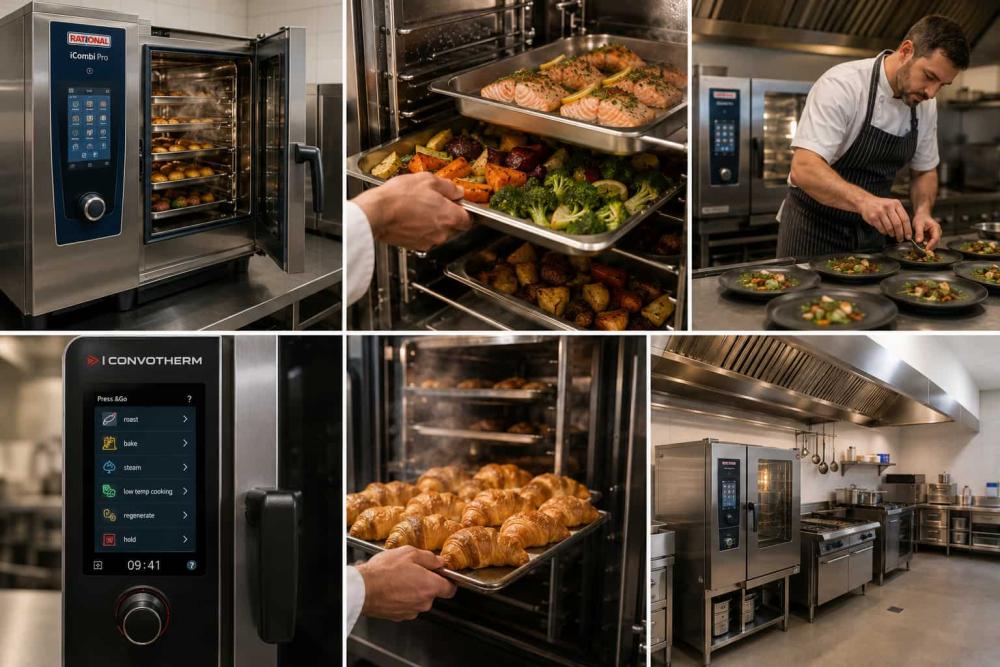
A combi oven combines steam, convection heat, or both, giving you precise control over how food cooks at home or in a commercial kitchen.
You can roast, bake, steam, braise and regenerate food while managing heat and moisture for more consistent batches.
For home use, a combi oven offers greater versatility than a conventional oven and can help retain moisture, flavour and nutrients when preparing everyday meals. It is particularly useful for baking bread, roasting meats, steaming vegetables and reheating food without drying it out.
For commercial kitchens, this results in more consistent batches and provides flexibility that can reduce the need for separate ovens and steamers, depending on your menu and production volume.
Before you invest, consider how combi technology compares with conventional, conveyor and deck ovens, along with capacity, utilities, installation and cleaning requirements.
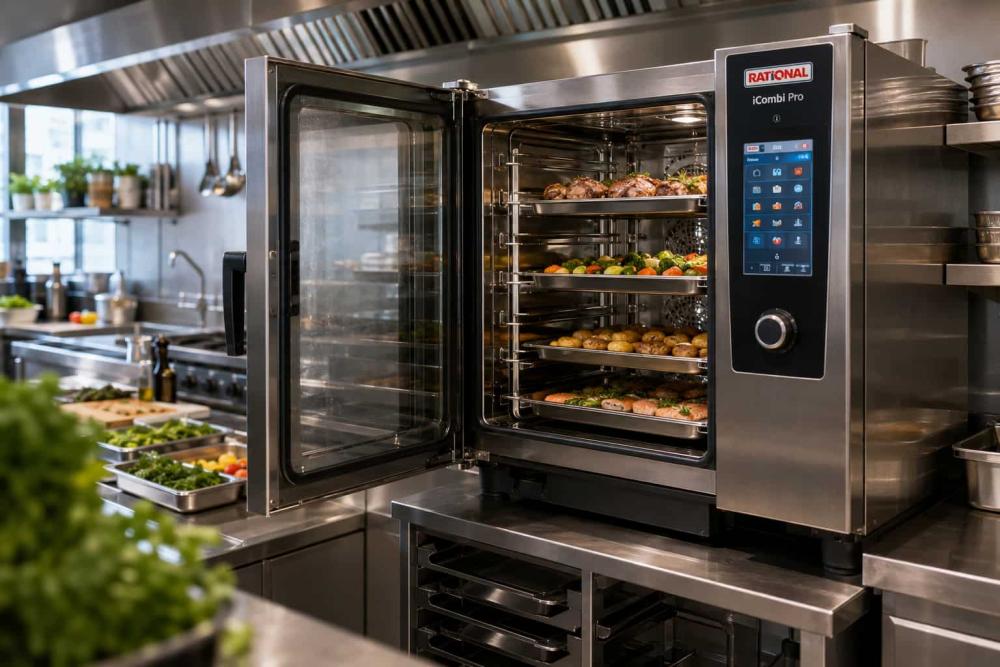
How Steam, Convection and Combination Cooking Work
A combi oven gives you three cooking modes: steam, convection, and combination cooking . You select the mode, temperature, humidity and cooking time to suit the product and your production requirements.
| Mode | How it works | Typical commercial uses |
|---|---|---|
| Steam | The oven generates moist heat around the food. | Vegetables, fish, rice, eggs and reheating covered or delicate items. |
| Convection | Fans circulate dry hot air through the cabinet. | Roasting, baking, grilling and browning. |
| Combination | The oven combines circulated heat with controlled steam. | Roasts, poultry, baked products and regeneration. |
In steam mode, moisture transfers heat efficiently and limits surface drying. You can cook products gently while retaining moisture, although steam alone will not produce a browned or crisp finish.
In convection mode , fan-driven air moves heat evenly around trays and gastronorm pans. This supports consistent browning and can reduce cooking variation between shelf positions, provided you do not overload the cabinet.
Combination mode adds humidity to convection heat. You can use moisture to reduce weight loss in meats and prevent baked products from drying too quickly, then use drier heat where colour or crispness is required.
Many commercial units allow you to set humidity levels or run staged programmes. For example, you can steam a roast during the initial cook, then switch to dry convection heat to finish and colour the surface.
Combi Ovens vs Conventional, Conveyor and Deck Ovens
A combi oven combines convection heat, steam and mixed cooking modes in one unit. You can adjust humidity, temperature and fan speed, making it suitable for roasting, baking, steaming, regenerating and cooking batches with consistent results.
| Oven type | Best suited to | Key limitation |
|---|---|---|
| Combi oven | Varied menus, batch cooking and regeneration | Higher purchase cost and water/drain requirements |
| Conventional oven | Basic roasting and baking | Less humidity control and less even heat distribution |
| Conveyor oven | High-volume, repeatable items such as pizza or toasted products | Limited flexibility for changing menus |
| Deck oven | Artisan bread, pizza and products needing strong base heat | Slower loading and less suited to mixed production |
A conventional oven uses dry heat and generally offers fewer controls than a combi. It can handle standard baking and roasting, but you may need separate steamers or holding equipment for other tasks.
A conveyor oven moves food through a heated chamber at a set speed. Choose one when your menu centres on consistent, high-throughput products, but it does not replace the steam and humidity functions of a combi oven.
Deck ovens use heated stone, ceramic or metal decks to deliver strong bottom heat. They suit breads and pizzas where crust and base texture matter, while a combi oven gives you broader options for protein, vegetables and multi-tray production.
Commercial Kitchen Applications
You can use a combi oven for steam cooking, convection cooking, or a controlled mix of both . This suits kitchens that need to produce varied menus from limited equipment and bench space.
Common applications include:
- Baking breads, pastries and tray bakes
- Roasting meats, poultry and vegetables
- Steaming seafood, rice, dumplings and greens
- Regenerating plated or bulk-prepared meals
- Cooking low-temperature proteins with controlled humidity
- Holding food at suitable serving conditions for short periods
The steam setting helps you retain moisture when cooking vegetables, fish and delicate items. Convection heat suits roasting and baking, while combination mode can support even cooking and reduce surface drying on larger joints, poultry and batch-cooked dishes.
| Operation type | Typical use |
|---|---|
| Restaurant or café | Breakfast production, roasting, baking and à la carte preparation |
| Aged care or healthcare | Bulk cooking and controlled meal regeneration |
| Catering | High-volume batch production and service preparation |
| Bakery or deli | Baking, roasting and hot food display replenishment |
| Pub or club | Functions, carvery items and consistent batch cooking |
For busy operations, programmable cooking cycles can help your team repeat set procedures across shifts. You still need to select suitable trays, loading levels, cleaning routines and cooking settings for each product.
Key Considerations Before Buying
Choose capacity for your busiest realistic service period, not your average day. Check tray format and rack count, including whether you need GN 1/1, GN 2/3, bakery trays or a mixed setup.
| Consideration | What to check |
|---|---|
| Available space | Unit dimensions, door swing, stacking options and access for servicing |
| Utilities | Electrical load, gas supply where applicable, water inlet, drainage and ventilation |
| Cooking requirements | Steam, convection, combi mode, regeneration, proving and overnight cooking |
| Controls | Manual controls versus programmable recipes, HACCP records and staff access levels |
| Cleaning | Automatic wash system, chemical requirements and daily cleaning time |
Confirm the oven’s temperature range and humidity control suit your menu. Low-temperature operation can support proving and gentle cooking, while higher settings suit roasting, baking and finishing.
Water quality matters. If your supply is hard or untreated, fit the specified filtration or treatment equipment to reduce scale build-up and protect steam-generation components.
Consider whether one larger unit or two smaller stacked ovens best suits your operation. Two ovens can provide flexibility during quieter periods and allow some production to continue if one unit requires service.
Ask about installation, warranty coverage, local service support and the availability of replacement parts. Include ongoing costs such as cleaning chemicals, water treatment, energy use and planned maintenance in your budget.
Rational and Convotherm Compared
Rational and Convotherm both supply commercial combi ovens that combine steam, hot air and combination cooking. You can use either brand for roasting, baking, steaming, regeneration and overnight cooking in busy kitchens.
| Consideration | Rational | Convotherm |
|---|---|---|
| Controls | You get guided cooking through the iCookingSuite system on iCombi models. | You get programmable cooking functions and touchscreen controls on C4 models. |
| Best fit | You may prefer it when you need highly guided workflows across varied menu items. | You may prefer it when you want strong combi performance with flexible configuration. |
| Door design | You can select standard left- or right-hinged options by model. | You can specify the disappearing door on selected models to improve access in tight pass areas. |
| Budget | You will often pay a higher upfront price for comparable capacity. | You may find a lower purchase price on similar-size units, depending on specification and supplier. |
You should compare like-for-like tray capacity, power supply, water treatment requirements and warranty terms rather than comparing brand names alone. A 6-grid unit may suit a small café or aged-care kitchen, while 10-grid and 20-grid models better support higher-volume production.
Your local service coverage matters as much as the oven specification. Check that you can access trained technicians, genuine parts and planned maintenance support in your area before committing.
Explore MVO Combi Oven and Installation Options
MVO supplies commercial combi ovens for restaurants, hotels, function venues, aged-care kitchens and high-volume food production. You can choose gas or electric models with 6, 10 or 20 tray capacities, depending on your service volume and available space.
A combi oven gives your kitchen convection, steam and combination cooking in one unit. You can use it for roasting, baking, steaming, regenerating prepared food and cook-chill production while maintaining more consistent results across batches.
| Consideration | What to check |
|---|---|
| Capacity | Tray count, GN pan size and expected covers per service |
| Utilities | Gas type, electrical supply, water connection and drainage |
| Positioning | Ventilation, access clearance and safe operator workflow |
| Menu | Whether you need steaming, baking, roasting or regeneration capability |
Before ordering, measure the installation area and confirm doorway access for delivery. You should also check whether your site needs a canopy, extraction changes, water filtration or a floor waste connection.
MVO can help you assess suitable combi oven options for your operation and coordinate installation requirements. Selecting the correct capacity and services from the outset helps avoid disruption when the equipment arrives.
Need a Combi Oven for Your Commercial Kitchen?
Browse the full range of commercial combi ovens or talk to the MVO Services team.


