

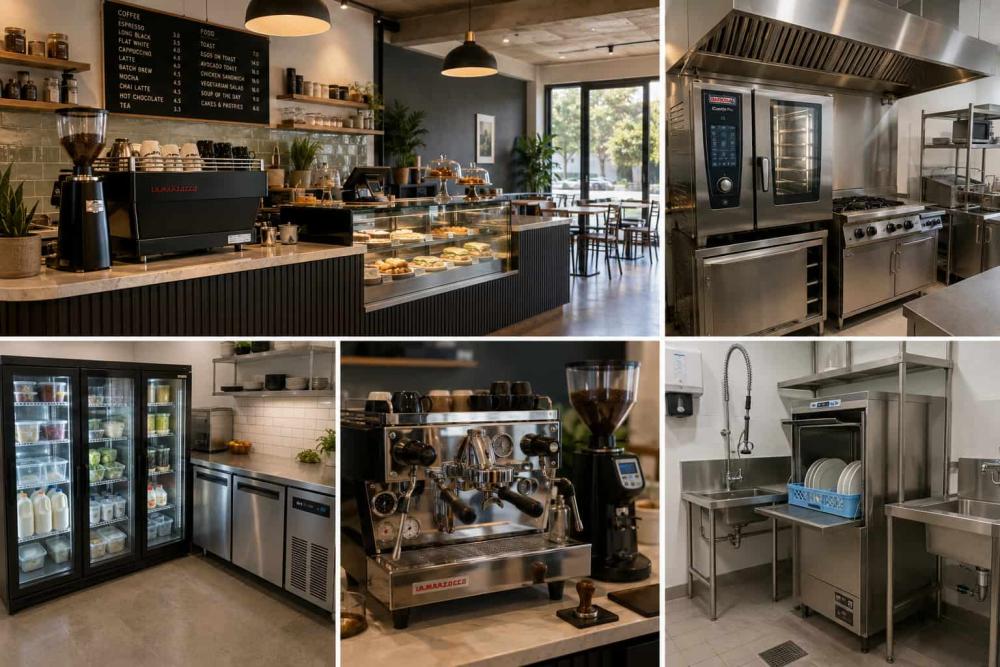
Starting a café requires a clear concept, a practical layout and a kitchen built to support your menu, team and service volume. You can open with greater confidence by planning the fitout, equipment, installation and compliance requirements before committing to the space.
Your kitchen affects how efficiently you prepare food, serve coffee and maintain safe workflows. The right commercial equipment, from refrigeration and cooking appliances to dishwashing and ventilation, should suit your available space and expected demand.
A well-planned fitout also helps you avoid costly changes during installation. Consider utilities, food safety requirements, access, workflow and equipment placement early so your café can operate reliably from opening day.
Planning Your Café Concept And Layout
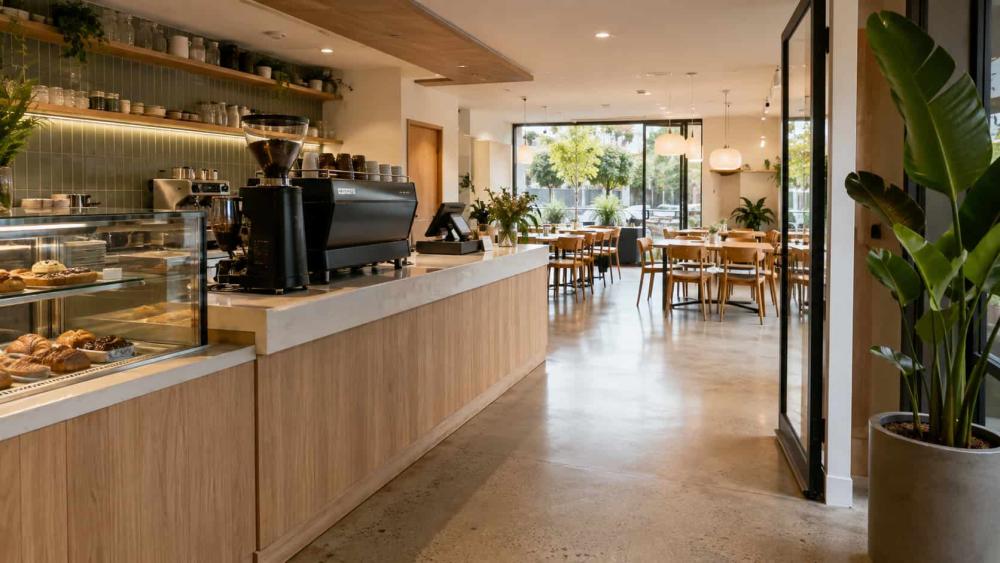
Your café concept should guide the menu, service style, customer experience and equipment list. Define whether you will focus on takeaway coffee, all-day brunch, quick service, bakery items or a broader food offering before committing to a fitout.
Plan the space around clear customer and staff flow. Customers need an easy path from entry to ordering, collection, seating and exit, while staff need safe access between storage, preparation, cooking, service and wash-up areas.
| Area | Fitout considerations |
|---|---|
| Front counter | Espresso machine, grinders, underbench refrigeration, display units and POS space |
| Food preparation | Stainless steel benches, handwash basin, refrigeration and suitable food-prep equipment |
| Cooking line | Commercial ovens, grills, fryers or induction equipment based on your menu |
| Dishwashing | Commercial dishwasher, pre-rinse unit, drainage and clean storage |
| Storage | Dry shelving, cool room or reach-in refrigeration, freezer capacity and chemical storage |
Allow adequate aisle widths, bench clearance and access for cleaning and maintenance. Your layout must also meet relevant food safety, ventilation, plumbing, electrical and accessibility requirements.
At MVO Services, we help you match commercial kitchen equipment to your menu, expected volume and available footprint. Selecting appropriately sized equipment early can prevent costly layout changes during installation.
Designing A Functional Commercial Kitchen
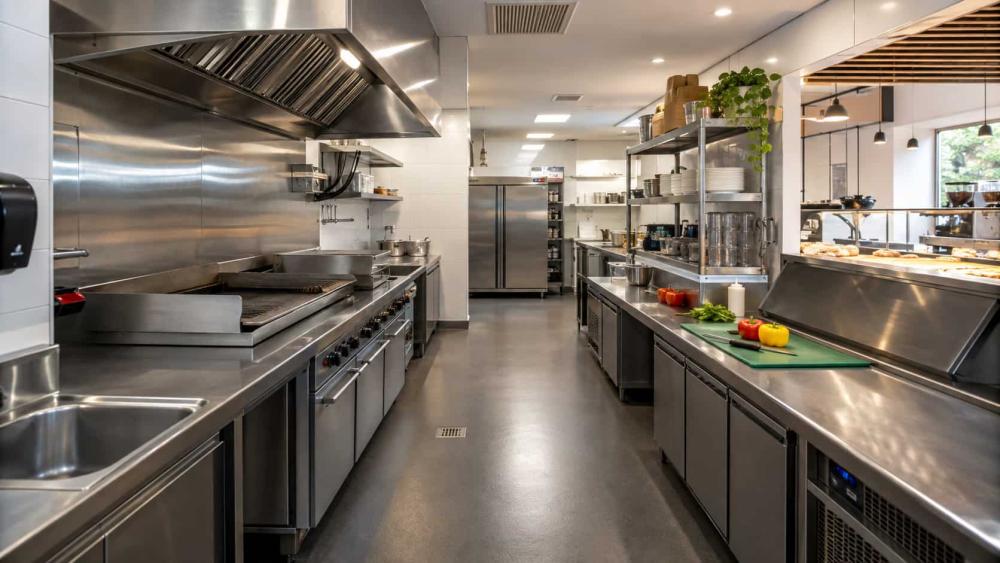
Your kitchen layout should support a clear flow: delivery, storage, preparation, cooking, service and cleaning. Separating raw food preparation from ready-to-eat food areas helps you manage food safety and reduce cross-contamination risks.
Plan equipment around your menu and expected service volume. A coffee-focused café may need an espresso machine, grinders, under-bench refrigeration, display refrigeration and a commercial dishwasher, while a food-led menu may also require ovens, grills, fryers or a combi oven.
| Kitchen area | Typical equipment |
|---|---|
| Cold storage | Upright fridges, freezers and cool rooms |
| Preparation | Stainless-steel benches, sinks and food processors |
| Cooking | Ovens, grills, induction cooktops and an exhaust canopy |
| Wash-up | Dishwasher, pot sink and handwash basin |
Allow practical space for staff to move safely, open appliance doors and carry stock. Position frequently used equipment close together to limit unnecessary steps during busy periods.
MVO Services can help you select commercial-grade equipment suited to your menu, available space and utility connections. Your installation should account for ventilation, drainage, electrical capacity, gas requirements and accessible hand-washing facilities before fitout begins.
Selecting Essential Café Equipment
Choose equipment around your menu, expected service volume and available kitchen space. Start with reliable coffee equipment, refrigeration, food preparation benches and warewashing, then add specialised appliances as your offering grows.
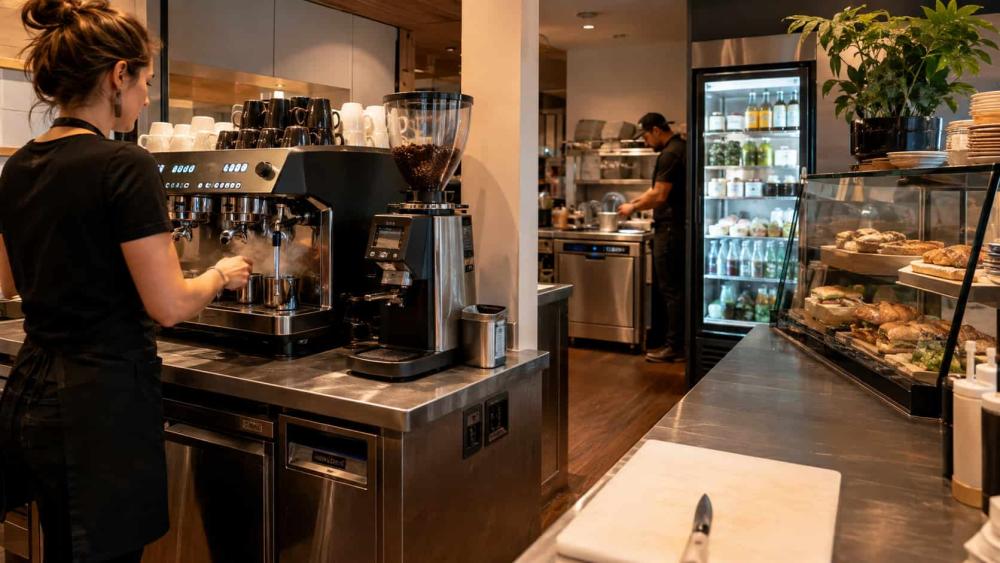
For espresso service, match your machine group count and grinder capacity to peak demand. Explore commercial coffee machines suited to a café counter, and allow room for a grinder, knock box, milk refrigeration and water filtration.
Your core fitout may include:
- Espresso machine, grinder and filtered-water connection
- Underbench and upright fridges, plus freezers where needed
- Commercial dishwasher, sink system and handwash basin
- Preparation benches, shelving and dry-storage racks
- Ovens, grills or fryers only if your menu requires cooked food
- Ice maker and blender for cold drinks
Use refrigerated or ambient food display cases to present ready-to-sell cabinet food while maintaining appropriate holding conditions. Select the size based on daily production, customer flow and counter layout.
Plan services before installation. Your equipment layout needs suitable electrical supply, plumbing, drainage, ventilation and clear staff pathways, while meeting relevant Australian food safety and building requirements.
Managing Kitchen Installation And Compliance
Your kitchen layout should support a clean workflow from delivery and storage through preparation, cooking, service and wash-up. At MVO Services, we help you select and install commercial equipment that suits your menu, available space and expected service volume.
Plan the essential zones before ordering equipment:
- Cold storage: commercial fridges, freezers and underbench units
- Preparation: stainless-steel benches, sinks and food processors
- Cooking: ovens, cooktops, fryers, grills or combi ovens
- Cleaning: dishwasher, glasswasher, pot-wash sink and handwash basins
- Extraction: compliant mechanical ventilation and exhaust canopies
| Installation area | Key consideration |
|---|---|
| Gas and electrical | Use appropriately licensed trades and allow capacity for all equipment. |
| Ventilation | Size extraction for the heat, smoke and grease produced by your cooking equipment. |
| Plumbing | Provide correct drainage, hot water, grease management and accessible sinks. |
| Access | Maintain clear staff movement, cleaning access and required exits. |
Confirm requirements with your local council and relevant state or territory authorities before starting construction. Food premises rules commonly cover washable surfaces, pest control, handwashing facilities, food storage, temperature control and waste disposal.
You may also need building approvals, development approval, a food business registration or licence, and a qualified Food Safety Supervisor, depending on your location and operation. Arrange inspections early so you can correct issues before opening.
Choose durable, commercial-grade equipment with service access and reliable spare-parts support. We can coordinate equipment supply, installation and commissioning to help your kitchen operate safely from day one.
Planning a cafe fitout?
Browse the full range of commercial catering equipment or talk to the MVO Services team about your cafe installation.


