
Pastry Sheeter
- 19% Off RRP
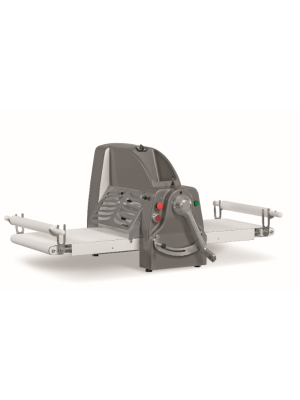
![]() Mecnosud PSM0570 Pastry Sheeter Bench Top. Roller length 500mm Tables 700mm (each side)RRP $9,200.00 ex GST Our Price $7,406.00 ex GST Our Price $8,146.60 Inc GST
Mecnosud PSM0570 Pastry Sheeter Bench Top. Roller length 500mm Tables 700mm (each side)RRP $9,200.00 ex GST Our Price $7,406.00 ex GST Our Price $8,146.60 Inc GST Daily Rental: $13.43 Inc GST
 - 21% Off RRP
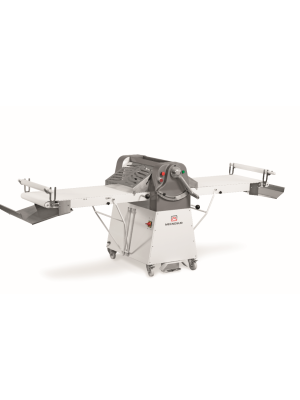
![]() Mecnosud PSM6120 Pastry Sheeter Floor StandingRRP $12,200.00 ex GST Our Price $9,693.00 ex GST Our Price $10,662.30 Inc GSTDaily Rental: $17.58 Inc GST
Mecnosud PSM6120 Pastry Sheeter Floor StandingRRP $12,200.00 ex GST Our Price $9,693.00 ex GST Our Price $10,662.30 Inc GSTDaily Rental: $17.58 Inc GST

Choosing a Commercial Pastry Sheeter
Why hand rolling doesn't scale
Laminated pastry is the most labour-intensive thing in a bakery and the least forgiving of inconsistency. Croissants and danish need dozens of turns at even thickness, and a sheet that varies by even a couple of millimetres bakes unevenly, so some pieces are underdone while others are over. A sheeter takes that variability out and does in minutes what takes a pastry chef an hour with a pin. For anyone producing laminated product daily, it's usually the piece of equipment that makes the product commercially viable at all.
Butter temperature is the whole game
The reason lamination fails is almost always temperature. Butter that's too warm smears into the dough instead of staying as discrete layers, and you lose the lift. Too cold and it shatters and tears the dough. A sheeter helps because it works fast enough that the dough doesn't warm up the way it does under hands and a bench, but it doesn't fix a warm room. If your bakery runs hot, a blast chiller between turns matters as much as the sheeter itself.
Belt width and roller gap
Belt width determines the widest sheet you can produce, and it should match the block size you work with and the trays you bake on. Roller gap range determines how thin you can go, which matters for filo and pasta at one end and thick pie bases at the other. Check the minimum gap as well as the maximum, since some machines that handle bread dough well won't go thin enough for delicate work.
Bench top or floor standing
Bench top sheeters have shorter belts and suit cafes, small bakeries and restaurants doing modest pastry volume. Floor standing models have longer belts, which means fewer passes to reach thickness and less handling of the dough, and that's better for lamination because every pass warms the butter. Folding belt models let you stow the arms when the machine isn't in use, which is worth having if bench space is tight, and most floor units have castors so they can be moved for cleaning.
Cleaning and flour management
Sheeters throw flour and dough scrap everywhere. Look at how the scrapers, belts and flour trays come off, because a machine that's awkward to strip down won't be cleaned properly and dough residue on rollers ruins the next sheet. Removable trays underneath catch flour and save sweeping.
Power and placement
Most bench top and standard floor models run on single phase. What they need more than power is length: a floor standing sheeter with the belts extended takes up considerably more room than its stowed footprint, so measure the working envelope rather than the machine. Position it with bench space at both ends for loading blocks and receiving sheets.
Brands and support
We supply pastry sheeters alongside the rest of the bakery range, including spiral and planetary mixers, dough moulders and dividers and provers and holding cabinets. If you're setting up or expanding a pastry section our team can spec the sequence so the equipment, trays and oven all match. Everything is available on SilverChef Rent-Try-Buy, with installation and servicing through our own technicians.